
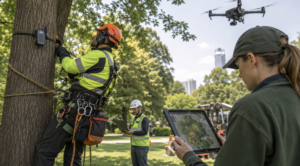
Tree care may not be the first industry people think about when they hear the words information technology, but the connection is stronger than most people realize. Modern tree work is no longer limited to ladders, chainsaws, ropes, trucks, and years of hands-on experience. Today, tree experts are using digital tools, mapping software, drones, data systems, mobile apps, weather tracking, online scheduling, safety platforms, and smart reporting to make tree care safer, faster, and more accurate.
This is exactly why the phrase “Tree Expert Meets IT” is more relevant than ever. The same digital transformation affecting healthcare, construction, logistics, finance, and manufacturing is also changing how arborists inspect trees, diagnose risk, manage crews, document work, and communicate with customers. For homeowners, commercial property managers, municipalities, HOAs, and real estate professionals, this means better information and smarter decisions about the trees surrounding homes, buildings, roads, schools, utilities, and public spaces.
As technology continues to shape business operations across nearly every industry, tree care is stepping into a new era. IT is helping tree experts combine field knowledge with real-time data, digital records, and advanced planning tools. The result is a more professional, transparent, and safety-focused approach to tree management.
How IT Is Changing the Tree Care Industry
Information technology is the backbone of modern communication, data management, and digital workflow. According to Wikipedia’s overview of information technology, IT involves the use of computers, telecommunications, and digital systems to store, retrieve, transmit, and process information. That same concept now applies directly to tree care.
In the past, a tree expert might inspect a property with handwritten notes, take a few photos, and provide a basic recommendation. While experience still matters greatly, today’s professionals can support that experience with digital inspection forms, cloud-based photos, GPS mapping, customer portals, and automated follow-up systems. This allows tree care companies to keep better records, reduce confusion, and give customers a clearer understanding of what needs to be done.
For example, when a tree is damaged, diseased, leaning, or growing too close to a structure, the property owner may not know whether it needs pruning, treatment, cabling, monitoring, or removal. A tech-enabled tree expert can document the issue with photos, mark its exact location, note visible defects, and create a digital report that can be reviewed later. This is especially helpful for large properties where dozens or even hundreds of trees may need to be tracked over time.
IT also improves communication between the office and the field. Scheduling software helps dispatch crews efficiently. Mobile apps allow crews to access work orders on-site. Digital invoicing speeds up billing. Customer relationship management systems help track estimates, approvals, and future maintenance. These tools may seem ordinary in other industries, but for tree care, they are helping companies operate with a higher level of organization and professionalism.
Drones, Mapping, and Digital Tree Inspections
One of the most interesting ways IT is improving tree care is through aerial visibility. Drones can help tree experts inspect tall trees, storm-damaged areas, steep terrain, wooded lots, and hard-to-reach canopies without immediately putting a climber in a risky situation. While drones do not replace trained arborists, they can provide valuable visual information before a crew begins physical work.
Drone footage can reveal broken limbs, canopy thinning, structural defects, storm damage, proximity to power lines, and overall tree condition. When combined with mapping tools, this information can help tree care professionals plan safer and more efficient work. A tree expert can review the property layout, identify access points, evaluate hazards, and decide what equipment may be needed before the crew arrives.
This is where the IT connection becomes especially powerful. Digital maps, GPS location data, and cloud storage allow inspection information to be saved and shared. A property manager can receive a report with images, notes, recommendations, and priority levels. A municipality can track trees along streets, parks, or public buildings. A homeowner can understand exactly which tree is being discussed and why action may be recommended.
Publications like Computerworld regularly cover how digital systems, AI, enterprise software, and workplace technology affect business operations. Those same IT principles apply to tree care businesses that want to improve safety, reduce paperwork, and deliver a better customer experience.
Tree Risk Assessment Gets Smarter with Data
Tree risk assessment is one of the most important parts of professional tree care. A tree may look healthy to an untrained eye but still have hidden risks, including internal decay, root damage, weak branch unions, pest activity, storm stress, or structural instability. A qualified tree expert knows what to look for, but IT tools help organize and strengthen the inspection process.
Digital forms can standardize the way tree risks are documented. Instead of relying only on memory or scattered notes, tree experts can record species, size, condition, defects, targets, recommended action, and urgency. Photos can be attached to each record. Follow-up dates can be scheduled. Historical records can show whether a tree is improving, declining, or becoming more dangerous over time.
This matters because tree care decisions often involve safety, liability, property protection, and long-term planning. If a large tree is close to a home, business, driveway, sidewalk, or utility line, having clear documentation can help property owners make responsible decisions. A digital report can also be useful for insurance discussions, HOA approvals, municipal compliance, or property maintenance records.
When people search online for a Tree Expert Near Me, they are often looking for more than someone with equipment. They want someone who can evaluate the tree properly, explain the situation clearly, and recommend a safe course of action. Technology helps support that trust by making the process more transparent and easier to understand.
Weather Technology and Emergency Tree Care
Tree care is heavily affected by weather. Wind, rain, lightning, flooding, ice, drought, and severe storms can all weaken trees or create emergency situations. IT has made weather monitoring much more accessible for tree care professionals and property owners.
Storm tracking, radar apps, satellite imagery, and emergency alert systems can help companies prepare for high-demand periods. When a major storm is expected, a tree care company may use scheduling systems to prioritize emergency calls, stage equipment, and prepare crews. After the storm, digital dispatching can help organize urgent jobs involving fallen trees, blocked driveways, damaged roofs, or hazardous limbs.
This is where IT news and broader technology reporting become surprisingly relevant to tree care. Outlets like Reuters Technology News track developments in technology, infrastructure, data, automation, and global digital systems. These trends influence the tools that service companies use every day, including the platforms that help tree care companies respond faster and more efficiently.
Weather data also supports preventive maintenance. If a property has trees with known structural issues, a tree expert may recommend pruning, cabling, bracing, or removal before severe weather creates a bigger problem. With better data and clearer records, property owners can move from reactive emergency calls to proactive tree management.
AI, Software, and the Future of Tree Diagnosis
Artificial intelligence is entering nearly every field, and tree care is no exception. While AI should not replace professional judgment, it can support tree experts by helping organize information, analyze images, identify patterns, and improve workflow.
For example, image recognition technology may help identify potential signs of disease, pest damage, canopy stress, or species characteristics. Software platforms may help tree companies sort service requests, rank risk levels, or generate preliminary reports. AI-powered scheduling tools may help optimize routes and crew assignments. Customer service chat tools may answer basic questions, collect photos, and direct urgent issues to the right person.
Technology publications like MIT Technology Review often cover emerging developments in AI, automation, cybersecurity, climate technology, and digital innovation. These broader trends eventually influence local service industries, including tree care. A tool that begins in research or enterprise technology can later become part of everyday field service operations.
Still, tree care requires real expertise. AI can help organize data, but it cannot replace the trained eye of a professional who understands tree biology, structural defects, soil conditions, equipment limitations, and job-site safety. The best future for tree care is not technology replacing experts. It is technology helping experts work smarter.
Cybersecurity and Customer Trust in Tree Care Businesses
As tree care companies use more digital tools, cybersecurity becomes more important. Customer names, addresses, phone numbers, photos, invoices, payment information, and property records may all be stored in online systems. That means tree care businesses must think about data protection the same way other modern companies do.
Secure websites, encrypted payment platforms, strong passwords, software updates, and reliable customer management systems help protect both the business and the customer. A company that invests in secure technology is not only improving operations; it is also building trust.
This is especially important as more customers research companies online before calling. They may read reviews, check websites, compare services, look for certifications, and submit contact forms. A professional digital presence gives customers confidence that the company is organized and serious about its work.
IT-focused outlets like ZDNET frequently report on cybersecurity, business technology, software, and digital transformation. These topics are not just for large corporations. Local service businesses also depend on safe, reliable digital systems to manage customer relationships and protect private information.
Why Online Visibility Matters for Tree Experts
A tree care company can have excellent equipment, skilled crews, and years of experience, but if customers cannot find it online, much of that value is hidden. This is another area where IT and tree care meet. Search engines, local listings, website content, online reviews, map results, mobile-friendly pages, and digital advertising all influence how customers choose a tree expert.
When someone has a hazardous tree, storm damage, or a major trimming need, they often search online first. They want fast answers, clear service information, proof of experience, and an easy way to request help. A strong website can explain services such as tree inspections, pruning, removal, risk assessment, land clearing, disease evaluation, and emergency response.
Good content also helps build topical authority. When a tree care website explains safety, tree health, storm preparation, property protection, and professional evaluation, it becomes more useful to both visitors and search engines. Linking to trusted sources, publishing helpful information, and keeping content updated can support better credibility over time.
News and analysis sources like WIRED cover how technology affects business, culture, software, AI, and digital behavior. For tree care companies, those changes matter because customer behavior is increasingly digital. People do not just ask neighbors anymore. They search, compare, click, read, and decide.
Smarter Tree Care Means Better Property Protection
Trees add beauty, shade, value, privacy, and environmental benefits to a property, but they also require responsibility. A neglected tree can become a serious hazard. Dead limbs can fall. Roots can affect hardscapes. Storm-damaged trees can threaten buildings. Overgrown branches can interfere with roofs, gutters, signs, lights, fences, roads, and utility areas.
A tree expert using modern IT tools can give property owners a clearer plan. Instead of guessing, the expert can document concerns, prioritize work, and explain the reasoning behind each recommendation. This helps customers understand what is urgent, what can wait, and what should be monitored.
For commercial properties, the benefits are even greater. Apartment complexes, schools, churches, shopping centers, office parks, golf courses, and municipal properties may have many trees spread across large areas. Digital records make ongoing tree management more practical. A property manager can track completed work, schedule future inspections, and create budgets based on documented needs.
IT helps turn tree care from a one-time service call into a long-term property management strategy.
The Human Expert Still Matters Most
Even with all the technology available today, the tree expert remains the most important part of the process. Tools can capture images, store records, organize schedules, and support communication, but professional judgment is still essential. Trees are living organisms, and every property is different.
A good tree expert understands how species respond to pruning, how decay affects structure, how storms change risk, how soil conditions influence root systems, and how to perform work safely. Technology helps make that expertise easier to document, explain, and apply.
This balance is what makes the future of tree care so exciting. The industry is not becoming less personal because of technology. In many ways, it is becoming more accountable. Customers can see photos, review reports, approve estimates online, and keep records for future reference. Crews can arrive better prepared. Businesses can respond faster. Property owners can make more informed decisions.
Technology is not replacing trust. It is helping build it.
Conclusion
Tree Expert Meets IT: The Surprising Tech Behind Safer, Smarter Tree Care is more than a catchy article title. It describes a real shift happening in the tree care industry. Drones, digital inspections, GPS mapping, mobile apps, scheduling software, weather tracking, AI tools, online reporting, cybersecurity, and search visibility are changing how tree experts work and how customers choose them.
For homeowners and property managers, this means better documentation, clearer recommendations, safer job planning, and more confidence in the decisions being made. For tree care companies, it means improved organization, stronger communication, better safety practices, and a more professional customer experience.
The future of tree care will still depend on skilled people who understand trees, risk, equipment, and property protection. But the best tree experts will also know how to use technology to support their work. When hands-on experience meets smart IT tools, tree care becomes safer, smarter, and more valuable for everyone involved.